Best Rabbit Toys 2026
Compare 5 of the best rabbit toys for 2026: safe apple wood, grass balls, and timothy chew sticks that satisfy chewing and foraging and keep your bunny happy.
Rabbits are clever, busy little animals, and a rabbit with nothing to do is a rabbit that will redecorate your baseboards. Toys give them safe outlets for the things they are wired to do: chew, toss, dig, and forage. Chewing matters most of all, because a rabbit's teeth never stop growing, and gnawing on safe wood and grass helps keep them worn down and healthy. The right toys protect your furniture and your rabbit's mind in one go.
We compared popular rabbit toys using listed materials, construction, value, and the recurring themes in verified owner reviews. We did not test these with our own rabbits. Instead we judged each one against the safety basics rabbit-savvy vets emphasize: natural untreated materials, no small or detachable hazards, and a focus on the chewing and foraging behaviors rabbits need. Below are five we recommend, a comparison table, and guidance for keeping a rabbit happily entertained.
Best Rabbit Toys 2026

Grddaef 20-Piece Apple Wood Chew Toy Set
Natural apple wood sticks and timothy grass chews in a big variety set for teeth and boredom.
VESPRO FurriHop Assorted Natural Chew Grass Ball Rabbit Toy
Rolling woven grass balls that rabbits love to toss, nudge, and nibble, great for active play.

VESPRO 52-Piece Timothy Chew Sticks
Timothy grass molar sticks mixed with dried flowers like rose and calendula for foraging fun.
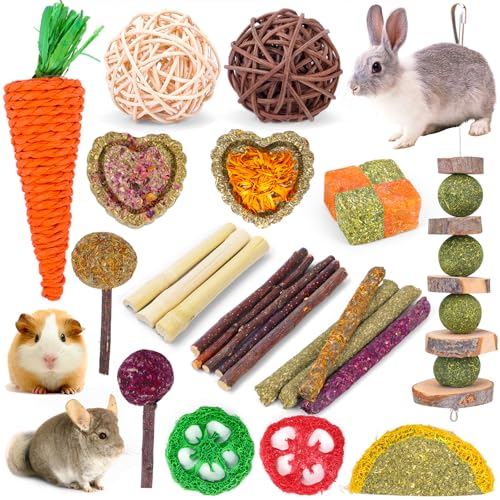
VESPRO Timothy Hay Sticks and Balls
Mixed set of timothy hay sticks and chew balls covering both gnawing and tossing in one box.

Sweet natural bamboo sticks for hard-core chewers that need a tougher gnaw, a budget classic.
How Do These Rabbit Toys Compare?
| Toy | Price | Type | Best For |
|---|---|---|---|
| Grddaef Apple Wood Set | $10 | Wood and grass chews | Variety, dental wear |
| VESPRO Grass Balls | $10 | Toss and chew | Active, playful rabbits |
| VESPRO Flower Chew Sticks | $10 | Grass and flowers | Foraging, picky chewers |
| VESPRO Sticks and Balls | $10 | Mixed set | Chewing and tossing combo |
| Sukh Bamboo Sticks | $7 | Hard chew | Strong chewers, budget pick |
How We Picked These Toys
We did not run a hands-on play lab. Instead we compared listed materials, construction, and value against rabbit safety guidance, then weighed the consistent patterns in verified owner reviews. Safety came first: we favored natural, untreated materials like apple wood, timothy grass, woven grass, and bamboo that break down into harmless fibers when chewed, and we avoided anything with paint, glue, small detachable parts, or chewable plastic. After safety, we looked for variety across the key enrichment behaviors, chewing, tossing, and foraging, so a rabbit has options that match its personality. Value mattered too, since toys get destroyed by design and need regular replacing. No toy replaces daily exercise, companionship, and a rabbit-savvy vet for any health concern.
A Closer Look at Each Toy
Grddaef 20-Piece Apple Wood Chew Toy Set
Our top overall pick packs 20 pieces of natural apple wood sticks and timothy grass chews into one affordable variety set, which is a smart way to discover what your rabbit prefers. Apple wood is a classic rabbit-safe chew that helps wear down continuously growing teeth, and the assortment keeps things interesting. Because there is so much in the box, you can scatter pieces for foraging, tuck them in toys, or simply offer a few at a time and rotate.
Pros: Big safe variety, apple wood supports dental wear, great value.
Cons: Quality of individual pieces can vary in a large mixed set.
VESPRO Grass Chew Balls, 8-Pack
For rabbits that love to toss and nudge things around, these woven grass balls are a hit. They roll unpredictably, which invites batting and chasing, and rabbits can also shred and nibble them safely. Eight in a pack means you can have several out for an active bunny and replace them as they wear down. They satisfy both the play and chew instincts in one simple, natural toy that is easy to love.
Pros: Encourages active play, safe to nibble, multiple included.
Cons: Enthusiastic chewers go through them fairly quickly.
VESPRO 52-Piece Timothy Chew Sticks
This generous set blends timothy grass molar sticks with dried flowers like rose, calendula, and forget-me-not, which adds scent and novelty that picky foragers find irresistible. The timothy supports dental wear while the botanical mix turns snack time into enrichment. Scatter a few pieces for your rabbit to hunt out, or hide them in a foraging toy. The large count makes it easy to keep variety in the rotation without reordering constantly.
Pros: Lots of pieces, flowers tempt picky rabbits, supports foraging.
Cons: Flowers are a treat element, so offer in moderation.
VESPRO Timothy Hay Sticks and Balls
A tidy all-rounder, this set mixes timothy hay sticks for gnawing with chew balls for tossing, covering two enrichment styles in a single box. It is a good starter assortment if you are not yet sure whether your rabbit is more of a chewer or a thrower, since it offers both. Everything is natural and safe to nibble, and the timothy base ties neatly into the hay-forward diet rabbits should be eating anyway.
Pros: Covers chewing and tossing, all-natural, good starter mix.
Cons: Smaller overall count than the dedicated stick sets.
Sukh Bamboo Chew Sticks, 240g
Some rabbits are serious chewers that demolish softer toys in no time, and for them a tougher gnaw helps. These sweet natural bamboo sticks give determined chewers something more substantial to work on, supporting dental wear while standing up to harder use. At the lowest price in our group, they are an easy budget addition to round out a toy rotation. Offer them alongside softer grass toys so your rabbit has texture variety.
Pros: Tough enough for strong chewers, natural bamboo, lowest price.
Cons: Harder texture suits dedicated chewers more than casual nibblers.
Keeping a Rabbit Happily Entertained
- Cover the categories. Offer something to chew, something to toss, something to dig in, and a foraging puzzle.
- Rotate regularly. Swap toys every week or two so they stay novel and interesting.
- Add free household toys. Plain cardboard boxes, tubes, and paper bags satisfy chewing and digging at no cost.
- Forage for treats. Hide chews and a few greens so your rabbit has to work for them, which is great mental exercise.
- Stay safe. Skip painted, glued, plastic, or small-part toys, and remove anything that splinters or sheds pieces.
Toys are a wonderful, low-cost way to keep a rabbit's body and mind healthy, but they work best alongside plenty of exercise, social time, and ideally a bonded companion. If your rabbit suddenly loses interest in everything, stops eating, or seems unwell, that is a health matter for a rabbit-savvy or exotic vet, not a toy problem. This guide is educational and does not replace professional veterinary advice.
Rabbit Care Planner
Track your rabbit's health, meds, vet visits, mobility, nutrition, and quality of life, all in one printable planner.
Related Rabbit Guides
Frequently Asked Questions
Why do rabbits need toys?
Rabbits are intelligent, active animals that get bored and stressed without enrichment. Toys give them safe outlets for natural behaviors like chewing, digging, tossing, and foraging, which keeps their minds busy and their bodies moving. Chewing is especially important, since a rabbit's teeth grow continuously and gnawing on safe wood and grass helps wear them down. A bored rabbit is more likely to chew furniture, dig carpet, or develop problem behaviors, so toys protect your home as much as your rabbit's wellbeing.
What materials are safe for rabbit toys?
Stick to natural, untreated materials your rabbit can safely nibble: apple, willow, and other rabbit-safe woods, untreated wicker and seagrass, plain cardboard, timothy or grass, and bamboo. Avoid anything with paint, varnish, glue, plastic that can be chewed into sharp pieces, soft rubber, or small parts that could be swallowed. Skip toxic woods like cherry, plum, peach, and apricot. When in doubt, choose simple grass and wood toys made specifically for rabbits, and supervise new toys at first.
How can I tell if a toy is a choking or blockage hazard?
Avoid toys with small detachable parts, bells, soft squeaky plastic, or stuffing a rabbit could pull out and swallow. Rabbits cannot vomit, so anything indigestible that gets eaten can cause a dangerous blockage. Choose chew toys that break down into harmless fibers, like wood, grass, and cardboard. Inspect toys regularly and remove any that are splintering badly or shedding small pieces. If you ever suspect your rabbit swallowed something it should not have, contact a rabbit-savvy vet promptly.
How many toys does a rabbit need?
Offer a small rotating variety rather than a huge pile. A few chew toys, something to toss, something to dig in, and a foraging puzzle cover the main enrichment categories. Rotating toys every week or two keeps them interesting, since rabbits lose enthusiasm for the same items left out constantly. Watch which kinds your rabbit prefers, whether that is chewing, throwing, or digging, and lean into those. Free-roam time and a bonded companion are also powerful forms of enrichment alongside toys.
My rabbit ignores its toys. What should I try?
Rabbits have strong preferences, so experiment with type and texture. Some love to chew hard apple wood, others prefer tossing light grass balls or digging in a cardboard box of shredded paper. Try placing toys where your rabbit likes to hang out, hiding treats inside foraging toys, and rotating items so they feel new. Stuffing a toilet roll with hay is a cheap classic that wins many rabbits over. Patience and variety usually reveal what your particular bunny enjoys.
Are cardboard and household items safe rabbit toys?
Many plain household items make excellent, free rabbit toys. Plain cardboard boxes, toilet and paper-towel tubes, untreated paper bags, and old phone books are popular for chewing, digging, and tunneling. Remove any tape, staples, glossy printed coatings, and plastic windows first. Avoid anything with ink-heavy glossy finishes or adhesives. These simple items satisfy a rabbit's urge to chew and burrow and can be replaced freely, making them a great low-cost complement to dedicated chew toys.
Need more help caring for your rabbit?
Browse our guides by topic to find practical solutions.
Wellness Planner: $39