Best Timothy Hay for Rabbits 2026
Compare 5 of the best timothy hays for rabbits in 2026. Fresh, high-fiber grass hay supports digestion and dental health, plus how to pick and store hay for your bunny.
If you do just one thing well for your rabbit, make it hay. Grass hay should be about 80 percent of an adult rabbit's diet, and timothy is the gold-standard choice that most rabbit-savvy vets and the House Rabbit Society recommend. All that long fiber keeps the gut moving and helps prevent GI stasis, while the constant chewing wears down teeth that never stop growing. A good hay habit quietly prevents some of the most common and most serious rabbit health problems.
We compared popular timothy hays using published specifications, cut and fiber details, sourcing, bag size and value, and the recurring themes in verified owner reviews. We did not run a feeding trial. Instead we looked at which hays consistently arrive green and fragrant, hold up without excess dust, and offer a sensible balance of leaf and stem for a rabbit. Below are five we recommend, a comparison table, and guidance for picking and storing the right hay.
Best Timothy Hay for Rabbits 2026

Hand-selected high-fiber timothy with long strands and a good leaf-to-stem ratio, a reliable everyday bag.

Oxbow Western Timothy Hay, 40 oz
All-natural hand-sorted grass hay known for freshness and a sweet, green smell rabbits love.
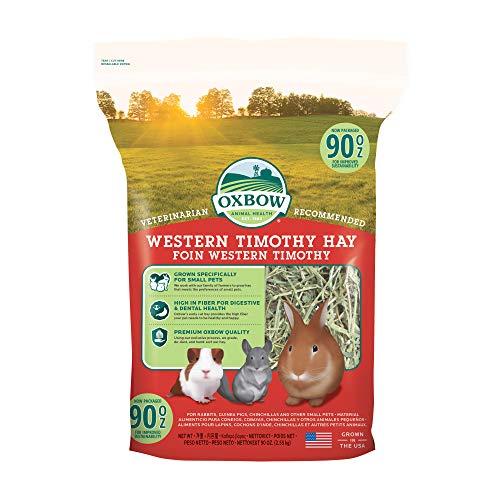
Oxbow Western Timothy Hay, 90 oz
Larger 90-ounce bag of premium hand-sorted timothy for better value in multi-rabbit homes.

Kaytee Timothy Hay, 12 lb Bulk
Economical 12-pound box for households that go through a lot of hay and can store it dry.

Kaytee Wafer Cut Timothy Hay, 60 oz
Compressed wafer-cut timothy that stays tidy and is easy to portion into a feeder with less mess.
How Do These Timothy Hays Compare?
| Hay | Price | Size | Best For |
|---|---|---|---|
| Kaytee Timothy 3 lb | $11 | 3 lb | Everyday value, single rabbit |
| Oxbow Western 40 oz | $12 | 40 oz | Freshness, picky eaters |
| Oxbow Western 90 oz | $22 | 90 oz | Better value, multi-rabbit homes |
| Kaytee Timothy 12 lb | $36 | 12 lb | Bulk buyers with dry storage |
| Kaytee Wafer Cut 60 oz | $14 | 60 oz | Less mess, tidy feeders |
How We Picked These Hays
We did not run a feeding lab or test bales ourselves. Instead we compared each product's cut, fiber profile, sourcing, and bag size against what rabbits actually need, then weighed the consistent patterns in verified owner reviews. We focused on a few things that matter most. First, freshness and aroma, because rabbits readily refuse hay that arrives yellow, dusty, or musty, and freshness is the single most common theme in reviews. Second, a healthy leaf-to-stem ratio, since rabbits need the coarse stems for fiber and dental wear but also enjoy the softer leaf. Third, value and packaging, because hay is fed in large quantities and the right bag size keeps it both affordable and dry. None of these hays replace veterinary advice, and a rabbit that suddenly refuses hay should see a rabbit-savvy vet.
A Closer Look at Each Hay
Kaytee Timothy Hay, 3 lb
Our everyday top pick is hand-selected for long fiber strands and a good leaf-to-stem ratio, the two qualities that make hay both nutritious and dental-friendly. The 3-pound bag is a sensible size for a single rabbit, large enough to last a while but small enough to stay fresh before you reach the bottom. It is grown without pesticides or artificial preservatives. As with any hay, give it a sniff on arrival and store it somewhere cool and dry.
Pros: Long high-fiber strands, good leaf-to-stem mix, widely available, fair price.
Cons: Bag-to-bag freshness can vary; check on arrival.
Oxbow Western Timothy Hay, 40 oz
Oxbow has a strong reputation among rabbit owners for consistently fresh, green, sweet-smelling hay, and that is exactly why it earns a spot here. The hand-sorted Western timothy tends to win over picky eaters who turn their noses up at duller hay. The 40-ounce bag suits a single rabbit and lets you judge the quality before committing to a bigger size. It is a dependable choice when freshness is your priority.
Pros: Reliably fresh and fragrant, hand-sorted, great for fussy rabbits.
Cons: Costs a little more per ounce than bulk options.
Oxbow Western Timothy Hay, 90 oz
The same well-regarded Western timothy in a larger 90-ounce bag, this is the value pick for homes with more than one rabbit or a particularly enthusiastic eater. Buying a bigger bag lowers the cost per ounce while keeping the quality owners trust. The trade-off is storage: a larger quantity needs a cool, dry, breathable container so it does not go stale or damp before you finish it.
Pros: Premium hay at better value, ideal for multi-rabbit homes.
Cons: Needs good dry storage to stay fresh.
Kaytee Timothy Hay, 12 lb Bulk
For households that go through hay quickly, the 12-pound bulk box offers the lowest cost per pound in our group. It is the same high-fiber, pesticide-free timothy as the smaller Kaytee bag, just a lot more of it. This option only makes sense if you can keep it genuinely dry and ventilated, since a large quantity exposed to humidity risks mold. Decant what you need into a smaller breathable container and keep the rest sealed away from damp.
Pros: Best price per pound, fewer reorders, same trusted hay.
Cons: Demands careful dry storage; too much for one small rabbit.
Kaytee Wafer Cut Timothy Hay, 60 oz
If hay mess drives you up the wall, the wafer-cut format is worth a look. The timothy is lightly compressed into tidy wafers that hold together, making it easy to portion into a feeder with far less scatter across the room. Rabbits still pull it apart and chew it like loose hay, so they get the same fiber and dental benefit with less cleanup for you. It is a practical option for tidy free-roam setups.
Pros: Much less mess, easy to portion, good for hay feeders.
Cons: Some rabbits prefer loose, fluffier hay to forage through.
Getting the Most From Your Rabbit's Hay
- Offer it unlimited. Hay should always be available and refreshed at least once a day, since rabbits cannot really overeat grass hay.
- Place it smartly. Many rabbits like to munch hay while they use the litter box, so a feeder beside the litter tray encourages both eating and good toilet habits.
- Check freshness. Green, sweet-smelling, slightly crunchy hay is good; yellow, dusty, damp, or musty hay should be discarded.
- Store it dry. Use a cool, ventilated, breathable container rather than a sealed plastic tub that traps moisture.
- Mind the balance. Hay first, then a small measured portion of pellets and fresh greens, with treats kept rare.
Hay is the foundation, but it works best alongside the rest of a good routine. Pair unlimited hay with a quality pellet and fresh greens, and watch your rabbit's eating and droppings, since a sudden drop in either can signal GI stasis or a dental problem. This guide is educational and does not replace care from a rabbit-savvy or exotic vet.
Rabbit Care Planner
Track your rabbit's health, meds, vet visits, mobility, nutrition, and quality of life, all in one printable planner.
Three of these hays now have a full single-product review: Oxbow Western Timothy 40 lb, Small Pet Select 2nd Cutting and Oxbow orchard grass.
Frequently Asked Questions
Why is timothy hay so important for rabbits?
Grass hay should make up about 80 percent of an adult rabbit's diet, and timothy is the most widely recommended choice. The long fiber strands keep the gut moving and help prevent GI stasis, a dangerous slowdown of the digestive system. Chewing tough hay also wears down a rabbit's teeth, which grow continuously, lowering the risk of painful molar spurs and malocclusion. Unlimited fresh hay is one of the simplest things you can do for a rabbit's lifelong health.
How much timothy hay does a rabbit need each day?
Offer unlimited timothy hay, refreshed at least once a day. A healthy adult rabbit will eat roughly a body-sized pile every day, and that is exactly what you want. Hay is low in calories and high in fiber, so rabbits cannot really overeat it. Keep a generous, always-available supply in a hay feeder or clean corner, and top it up whenever it runs low so your rabbit never goes without.
Is timothy hay better than alfalfa for rabbits?
For most adult rabbits, yes. Alfalfa is a legume that is very high in calcium and protein, which suits growing babies and nursing mothers but can contribute to bladder sludge and weight gain in adults. Timothy is a grass hay with a better calcium and fiber balance for rabbits over about seven months old. Many owners feed alfalfa to young rabbits, then transition to timothy as the main hay once the rabbit matures.
What does fresh, good-quality timothy hay look like?
Good timothy hay is green, fragrant, and a little crunchy, with a healthy mix of leafy strands and coarser stems. It should smell sweet and grassy, not musty or sour. Avoid hay that is yellow, dusty, damp, or moldy, since dust can irritate a rabbit's airways and mold can make them sick. First-cut timothy is stemmier and higher in fiber, while second cut is softer and leafier, so many owners offer a blend.
How should I store timothy hay to keep it fresh?
Store hay in a cool, dry, well-ventilated spot, away from direct sun and damp. A breathable container like a cardboard box, a paper bag, or a fabric bin works better than a sealed plastic tub, which can trap moisture and encourage mold. Buying in bulk is economical, but only if you can keep it dry. If hay smells off, looks dusty, or feels damp, discard it rather than risk your rabbit's gut and lungs.
My rabbit will not eat hay. What can I do?
First, make sure the hay is fresh and fragrant, since rabbits often refuse stale or dusty hay. Try a different cut or brand, place hay where your rabbit likes to rest and toilet, and reduce pellets and treats so hay becomes the main food. Mixing in a little orchard or meadow hay can tempt picky eaters. If your rabbit suddenly stops eating hay, is not pooping, or seems unwell, contact a rabbit-savvy vet promptly, as this can signal a dental problem or GI stasis.
Need more help caring for your rabbit?
Browse our guides by topic to find practical solutions.
Wellness Planner: $39